

Yom Kippur 1973. Kfar Ruppin was a small community of only 40 families. The holy day's silence was suddenly shattered as a surprise attack on Israel began, and the kibbutz sons were called to the front. Soon the devastating news of fallen sons began to arrive. Sunday, eight days into the fighting, three families received the news: Yakir, Itziv, and Ron. Families Yoav, Patza, and Avner were mourning. Two weeks later, the fourth blow struck the Baruch family with the news of Yossi’s fall in the battle for Mount Hermon.
Since that war, the kibbutz has never been the same. Four sons from such a small community—an open wound that remains in everyone's heart to this day.

Yossi Baruch
Born on November 11, 1952, son of Miriam and Yitzhak. A modest, gentle boy, a man of peace who loved people, nature, music, dance and flowers. At school, he emerged as a shrewd and critical thinker, with a deep understanding of poetry and literature. Although he was far from warlike in nature, he refused to compromise on his opinions: his teacher told how he argued with her about the interpretation of the song "Rain on the Battlefield" by Haim Gouri. Despite his inner world, Yossi did not give up combat service. He enlisted in the 13th Battalion in the Golani, where he served as a medic, proved to be a beloved friend to all, and devotedly took care of the health of his company comrades. How absurd and painful that such a peace-loving young man would die on the battlefield. On October 22, 1973, towards the end of the war, Yossi fell in the difficult battle to capture Mount Hermon, while treating a wounded comrade under fire.

Avner Ron
.jpg)
Yosef (Petza) Yatziv
Born on May 19, 1945, the son of Yaffa and Shimon. Petza combined opposing worlds within himself: the tough agricultural mechanization manager of field crops, and by his side a literary man who read Faulkner and Steinbeck and was thirsty to know the world. An outwardly quiet child, who was in fact the leader of every adventure and mischief. After fighting in armor in the difficult battles of the Six-Day War, he carried with him a deep scar and the understanding that the next war would look different - and even stood up at Ezer Weizmann's lecture and warned him that underestimating the enemy was a mistake. Between the agricultural seasons, he fulfilled his desire to see the world when he worked as a security guard for El Al. On October 8, 1973, in the midst of the containment battles in Sinai, Petza fell while commanding a tank platoon, hit by an Egyptian shell during the daring attempt to capture the Firdan Bridge.

Yoav Yakir
Born on December 2, 1951. Son of Masha and Avraham. A respected and beloved armor officer, a quiet leader who swept his subordinates after him thanks to his personal example and dedication. As a teenager, he revealed himself to have a broad opinion and vision on state and world affairs, wrote poetry and prose, and possessed endless willpower. At the outbreak of war on October 6, 1973, he stood with his lone tank platoon in the southern Golan Heights, and coolly conducted a heroic holding battle against a massive stream of Syrian armor – a battle that will go down in history. His platoon destroyed dozens of tanks and held back the breakthrough for hours. When his calls for ammunition were not answered and his supply of shells ran out, he continued to fight with machine gun fire until he was wounded and killed.
Born on February 16, 1951, son of Bronia and Gad. A rare combination of physical strength, artistic talent and inner calm. Loham was loved and admired in Sayeret Matkal, where he was nicknamed Jabel due to his height and physical abilities. As a teenager, he stood out as a leader, an outstanding student and with his abilities in art, swimming and all sports, and he chose to focus on soccer. As the goalkeeper of the local team, his name reached the first league teams and experts predicted a place for him in the Israeli national team. After his release, he chose to discover the world as a security guard at El Al and debated where he would direct his future – between art and an offer he received to develop a career as a soccer player. The outbreak of war stopped everything. He immediately returned to his comrades at the front, Avner was killed on October 8, 1973 while attempting to rescue a pilot who had ditched north of Qantara in Sinai.

In June 2020, we are appealing to the kibbutz management to authorize us to establish a memorial site for our four brothers on the "Ridge" hill: There is no more suitable place than this hill, the landscape of our childhood, the one overlooking the Gilead Mountains and the Jordan River, on which a post with concrete trenches was built after the war. We are not asking for money, only approval of the location and assistance in removing bureaucratic obstacles.

Arie Levin
Born on September 25, 1946 in Russia, the son of Yaakov and Ziva. He immigrated to Israel from Poland at the age of 14 as part of the youth immigration. Aryeh quickly and happily integrated into the youth group on the kibbutz. When his parents immigrated to Israel after him, he took care of them and helped them with great dedication even while he was still a student. He stood out as a smart boy, a gifted dancer and had an excellent voice, and was a member of a singing group that performed at all the kibbutz parties. During the Six-Day War, he fought in the Golani Brigade as a mortar team commander and participated in the conquest of the Golan Heights. Sadly, about six months after the war, on January 21, 1968, Aryeh was killed in a military training accident.

Benzion Israeli
Born in 1920 in Czechoslovakia, the son of Esther and Shlomo. A Zionist and a fighter at heart. In 1939 he fled the Nazis, and after a difficult journey he arrived in Israel, but was deported by the British to Mauritius. In 1942 he enlisted in the Czech army, and from there he arrived in the village of Ruppin. He was a field guard on the kibbutz, and his name preceded him as a brave guard. He was endowed with a warm soul and devotedly cared for his nieces when they were orphaned. In 1943 he volunteered again – this time for the Jewish Brigade – and fought in Belgium and the Netherlands, and after his release he went to help the deportees of Cyprus. With the outbreak of the War of Independence, he enlisted in the 13th Battalion in the Golani. After many battles, Bentzi fell on December 23, 1948, in the battle of the 86th Command Post in the Negev against the Egyptian army, while valiantly operating an anti-tank weapon against the tanks.
%20%D7%A9%D7%99%D7%9C%D7%A8.png)
Zvi (Bandy) Schiller
Born on October 11, 1919 in Czechoslovakia, son of Gabriela and Friedrich. The embodiment of vitality, full of energy and a sense of humor. Born in Czechoslovakia and devotedly active in the "Young Maccabi" movement. In 1942, he fled to Hungary, and a year later he immigrated to Israel and joined his friends in the village of Ruppin. Bundy, a talented painter who contributed greatly to local culture, and the cartoons he created accompanied the kibbutz for many years after his death. He devoted his time to caring for new immigrants and integrating them into the kibbutz. On September 7, 1947, he was called to defend the kibbutz's date orchard from an attack by Arab rioters. During the struggle, he was hit in the head by a bullet and died in the hospital. He left behind a wife: Yehudit and a son, Uri, who was born two months after his fall.
After receiving approval from the kibbutz, we decided that the place would be something bigger: the site would commemorate all the kibbutz's dead, tell the story of the kibbutz from its founding, and serve as a center for educational activities for youth.
Yochai Schulman
Born on May 26, 1972, son of Ella and Avi, who served in the army as an ambulance driver. A third-generation member of the kibbutz. With a captivating smile, a mane of hair and natural intelligence, he devoured life, was very much loved by his friends, and was a partner in every prank. He was not afraid to fight for his opinions, which he always expressed with his unique sense of humor. He began his military service in the artillery – a setting that oppressed him – but when he moved to serve as an ambulance driver, he found his happiness again. An "anti-soldier" with plans to reach the ends of the world after the army, but absurdly, he remained a soldier. On June 21, 1992, during his military service, Yochai was killed in a motorcycle accident.

Born on July 16, 1951, the son of Tzipora and Dov. To Holocaust survivors who were orphaned by their father at a young age, and took it upon himself to take care of his little sister with devotion. He arrived in Kfar Ruppin as part of the Nahal "Ya'alon" unit that was intended for Kibbutz Ketura. A talented and sensitive young man who was gifted with "golden hands" - he photographed, painted, and carved works with a simple penknife. He served as a respected guide in the youth movement and taught his students to love nature and simplicity. Tragedy struck on October 24, 1969, exactly the last night of the unit's stay in Kfar Ruppin, just before they were about to celebrate the completion of their training. Shlaimeleh was killed in the kibbutz courtyard by a shell fired by Fatah terrorists from Jordan.
Shlomo Svirski

Ilana Nagar
Born on December 23, 1950, daughter of Naomi and Yosef. She arrived in Kfar Ruppin as a member of the Nahal "Rimon" group. She was a modest girl who hid behind her tools, but to those who met her, she immediately stood out with her external and internal beauty. Disciplined and punctual, and excelled in sports. Ilana loved working on the kibbutz and the vibrant social life of the group, and stood out with her kindness and willingness to help everyone. Her short life was cut short in the midst of the War of Attrition. On November 11, 1968, Ilana was killed in the kibbutz courtyard by shelling from the Jordanian army.
After receiving approval from the kibbutz, we decided that the place would be something bigger: the site would commemorate all the kibbutz's dead, tell the story of the kibbutz from its founding, and serve as a center for educational activities for youth.
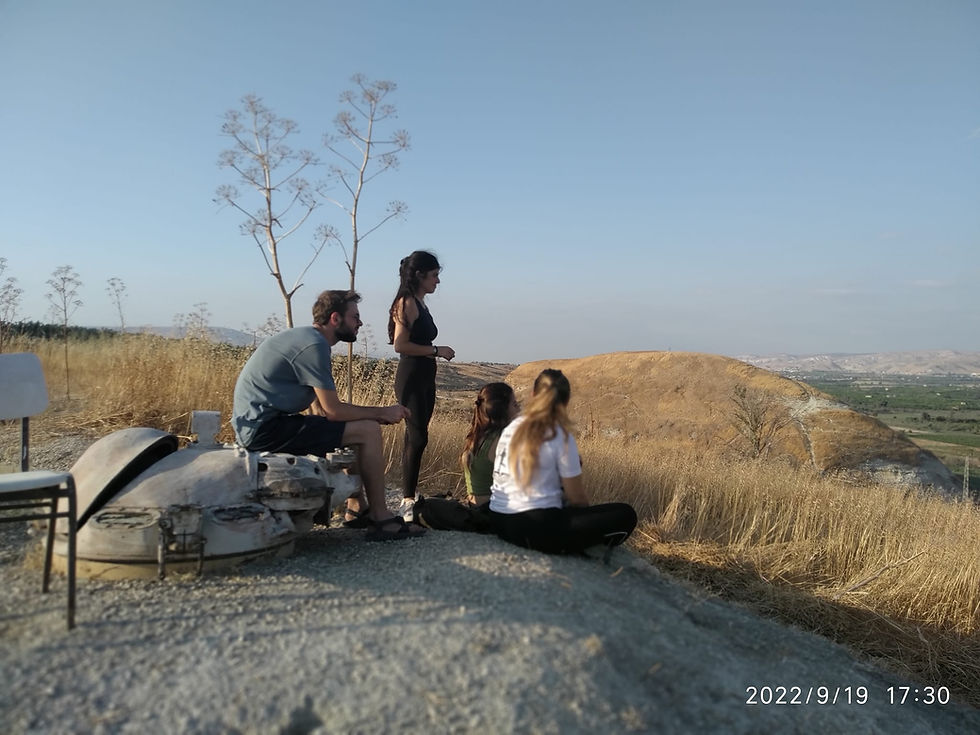

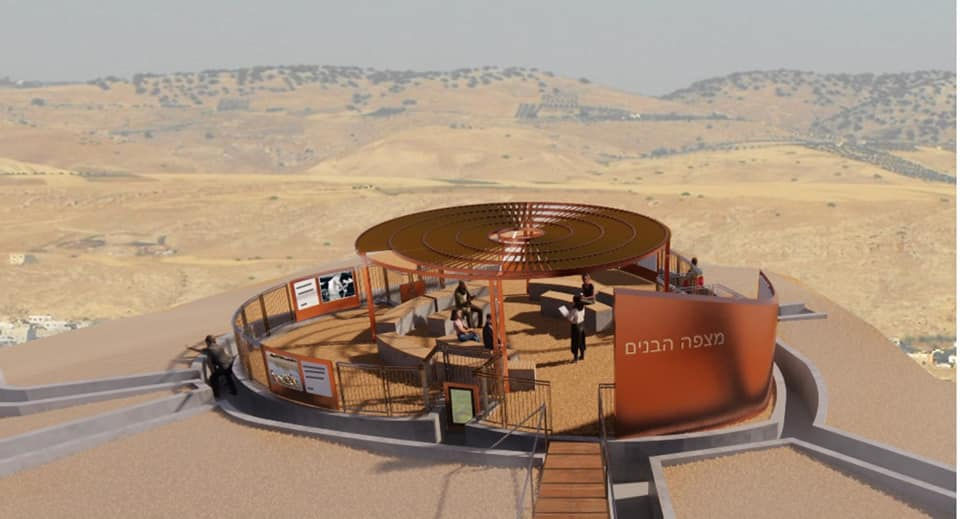
February 2026, we successfully completed the construction of the infrastructure and pergola on the outpost, the entrance walkway, the stairs leading up from the canal, and the safety fence around the site.
The structure stands, the view is breathtaking, but for the observatory to fulfill its purpose as an active heritage site and a respected educational center, we must complete the environmental development and its beating heart: design and establish the signage and content systems that will tell the stories of the boys and the battles, and create the educational and commemorative stations that will allow visitors and youth to learn about the heritage.
We invite you to become partners.
Every donation is another brick in the building of our legacy. Together, we will ensure that the memory of the boys will not just be a memory from the past, but a compass for future generations.
Did you know?
Donations to this project may be tax-deductible in Israel, the U.S, the U.K and Canada, in accordance with our Terms of Use. All donor recommendations must align with our organization's charitable objectives and may be redirected as needed, based on our policy and Terms of Use.
Contact Info
Email: minhal@chivruta.org
Phone Number: +972508272916
Website: http://www.chivruta.org
Organization Number: 580436632